What is weak foot dorsiflexion?
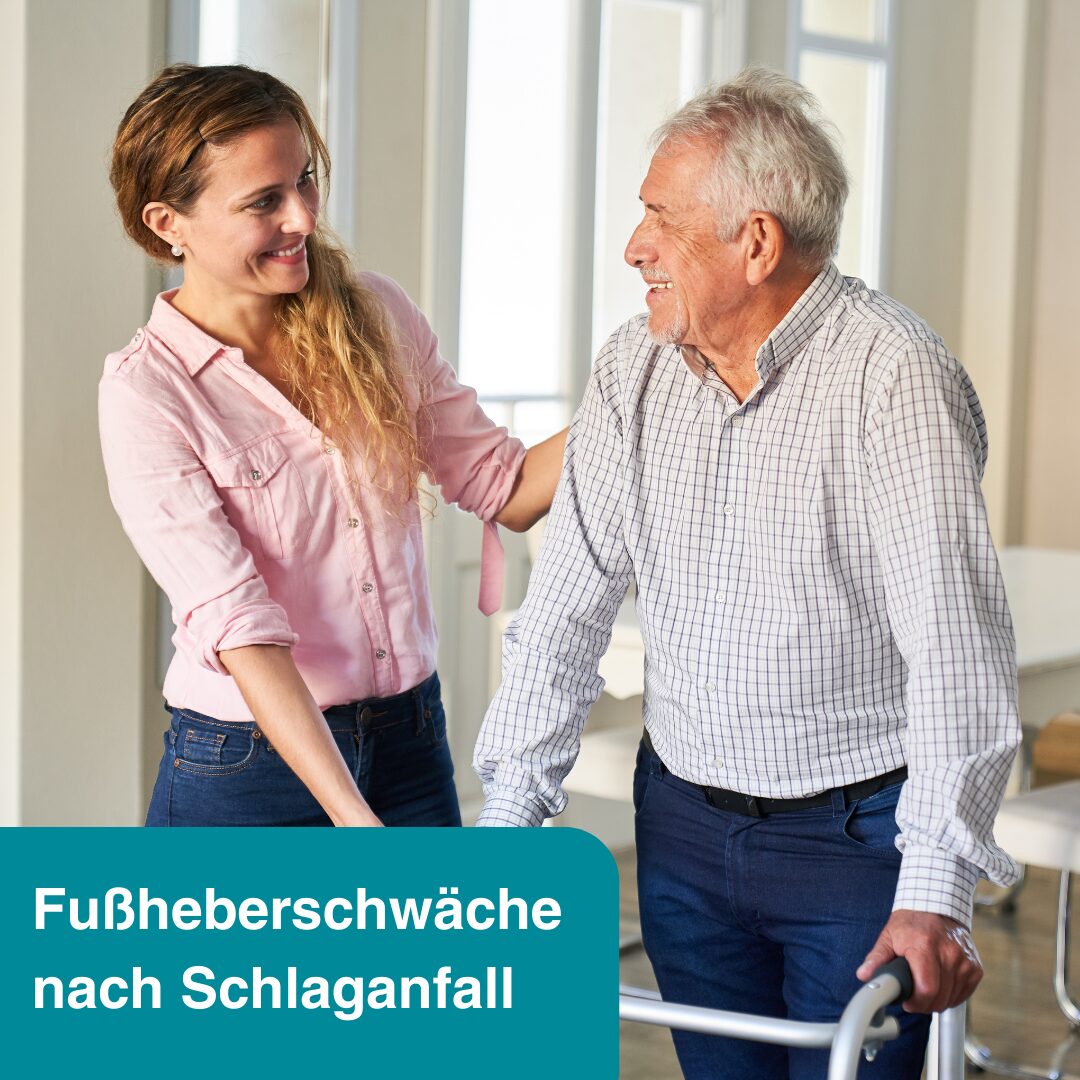
In the case of weak foot dorsiflexion, the active lifting of the foot no longer functions sufficiently. This is usually caused by damage to the nervous system – often as a result of a stroke.
The result:
The foot “grinds” when walking
Affected person lifts the leg unnaturally high (stepper gait)
Stumbling and falling occur more frequently
Walking becomes more strenuous and unsafe
Especially after a stroke, as described by the Robert Koch Institute describes as one of the most common neurological diseases in Germany, foot drop is a typical consequence.
Why does foot drop occur after a stroke?
A stroke damages certain areas of the brain that are responsible for muscle control. The signal transmission from the brain to the muscle is disrupted. The muscles themselves are usually not destroyed – they simply no longer receive sufficient impulses.
This opens up therapeutic possibilities:
If the signal is not received correctly, it can be technically supported.
Therapy options at a glance
The treatment depends on the individual findings. The following measures are often considered:
1. physiotherapy and gait training
The aim is to promote muscle activity and relearn movement patterns. Regular training is essential – but is often not enough on its own.
2. foot lifter orthosis
An orthosis passively stabilizes the foot.
Advantages:
Immediate stability
Reduced risk of falling
Disadvantages:
No active muscle stimulation
Possible muscle loss with long-term use
Less natural gait pattern
3. functional electrical stimulation (FES)
Functional electrical stimulation starts exactly where the natural signal transmission is disturbed.
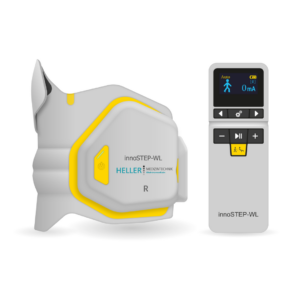
During the swing phase, an FES system specifically stimulates the nerve responsible for lifting the foot. This causes the foot to lift automatically when walking.
FES vs. orthosis – the decisive difference
| Orthosis | FES |
|---|
| Passive stabilization | Active muscle activation |
| Mechanical support | Electrical nerve stimulation |
| No muscle work | Muscle training with every step |
| Aids | Therapy & support in one |
While an orthosis stabilizes, FES trains the muscles at the same time. The gait pattern appears more natural and many patients report greater confidence in everyday life.
When is FES particularly useful?
Functional electrical stimulation is particularly suitable for
Patients after a stroke
People with incomplete paralysis
Affected persons with sufficient residual nerve function
People with a high degree of motivation for rehab
Expert fitting by trained medical staff is important.
Advantages of functional electrical stimulation
More natural movement
Reducing the risk of falling
Activation of weakened muscles
Integration into everyday training
Combination of therapy and mobility aid
FES is becoming increasingly important in modern neurorehabilitation in particular, as it not only compensates but also provides functional support.
Regaining quality of life
Mobility means independence. Untreated foot drop can lead to social withdrawal, insecurity and consequential damage.
The right therapy decision – whether physiotherapy, orthosis or FES – should be made individually and together with the treating physician or therapist.
Conclusion: active rather than passive support
While conventional aids provide stabilization, functional electrical stimulation focuses on active support and training at the same time. For many stroke patients, it can be a decisive step back to greater safety and quality of life.
Individual advice and professional fitting are crucial to the success of the therapy.
More on the topic
Detailed information on treatment for foot drop after a stroke and on specific treatment options with functional electrical stimulation can be found on the website of HELLER MEDIZINTECHNIK GmbH & Co KG.
The following link will provide you with further insights into therapeutic approaches, background information and practical solutions:
https://www.heller-medizintechnik.de/portfolio/fussheberschwaeche/schlaganfall/
There you will find out how modern FES systems can be individually adapted and provide long-term support for those affected in everyday life.